
接触部材質は回路遮断器の価格にどう影響するか
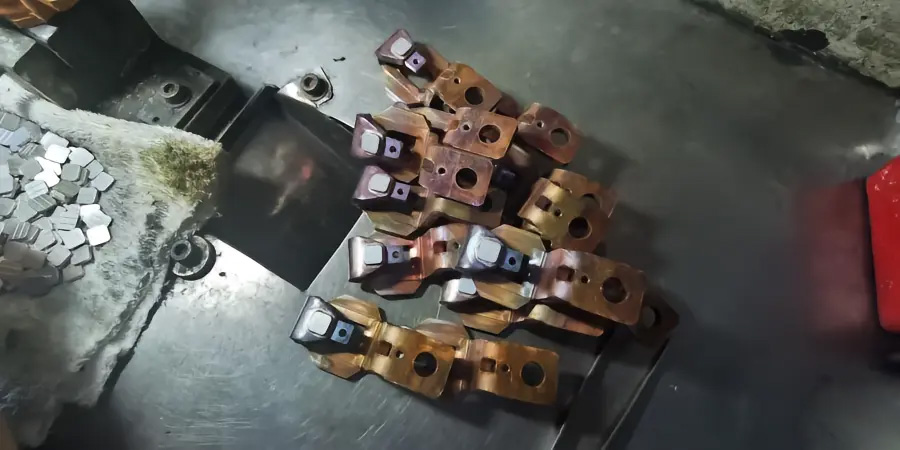
Two circuit breakers may look very similar. They may have the same rated current, similar dimensions, and even a similar basic design. But their prices can still be quite different. There are many reasons for this, and contact material is one of the most important ones.
Contacts are only a small part of a circuit breaker, but the contact material is an important factor when our sales team prepares a quotation. Different circuit breakers may use different contact materials, and the cost of these materials can affect the final product price.
For many customers, contact material is not a familiar word. When comparing circuit breakers, they usually focus more on the specifications and technical data shown on the paper. They may not pay much attention to the materials used inside the breaker. However, if you want to understand why a circuit breaker has a certain price, contact material is one part worth knowing about.
なぜ回路遮断器は接触部材質を変えるのか
Although contacts are small, they are the parts that directly carry and break the current. When the breaker is closed, the contacts need to keep a good electrical connection. When the breaker opens, they also need to deal with the arc created during switching. So, contact materials need to do more than simply conduct electricity.
Different circuit breakers also have different working conditions. Their rated current, breaking capacity, switching frequency, product design, and expected service life may all be different. In some products, the contacts need to maintain a stable connection for a long time. In others, they may need to withstand more switching operations and more arc exposure. These different requirements can lead to different choices of contact materials.
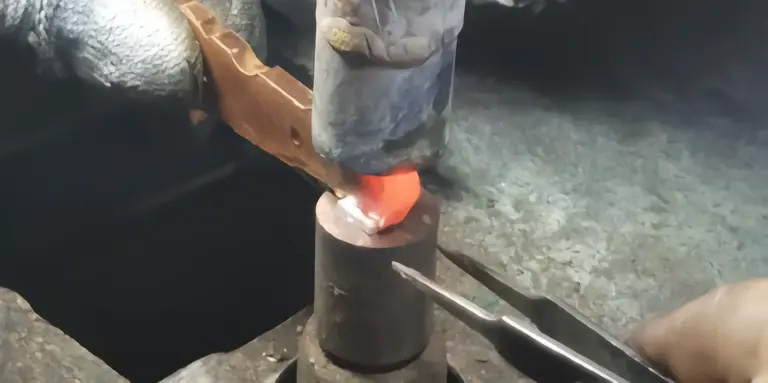
MCCB 可動接点への銀接点溶接
Contact materials also different in their properties. Some offer good electrical conductivity, while others provide better resistance to arcing, welding, or wear. Some materials can also provide a balance between performance and cost. For this reason, manufacturers do not simply use one contact material for every circuit breaker. They select materials based on the specific requirements and budget of the project.
This is why two circuit breakers that look very similar on the outside may use different contact materials inside. For buyers, these differences may not be visible from the product appearance or standard specifications, but they can still affect the cost behind the quotation.
Licen Insights
疑問に思われるかもしれません。お客様が接触部材質についてあまり詳しくない場合、どの材質を使うかはどう決めるのでしょうか。
In actual sales, our team usually makes a recommendation based on the customer’s budget, product requirements, and target market. We consider the balance between performance and cost, and then choose a suitable contact material for the customer.
一般的な接触部材質とは
なぜ回路遮断器ごとに接触部材質が異なるのかが分かったので、市場で使われている一般的な種類を簡単にご紹介します。
One common type is copper-based contact material. Copper has good electrical conductivity, and its material cost is relatively low. For these reasons, copper-based contact materials are widely used in circuit breakers and other electrical products. Depending on the product design and requirements, copper may also be combined with other materials rather than being used on its own.
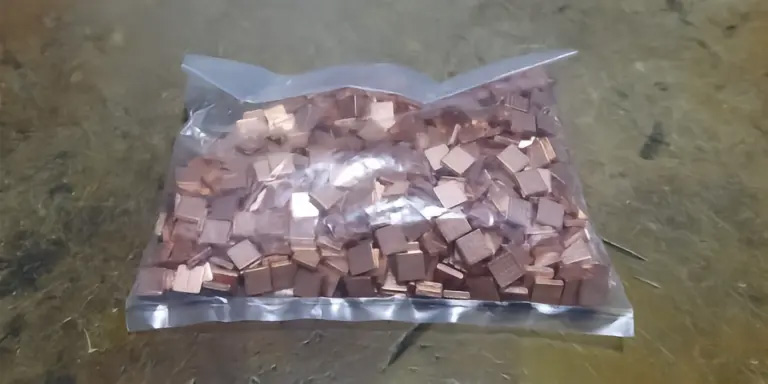
Copper-based contacts
Another common type is silver-based contact material. Silver has very good electrical conductivity, but circuit breaker contacts also need to handle arcing, welding, and wear. So, pure silver is generally not used as the main contact material in circuit breakers. Instead, manufacturers usually use silver-based alloys or composite materials to achieve a better balance of electrical and mechanical properties. However, silver is much more expensive than copper, so silver-based materials usually cost more.
For breakers used under more demanding conditions, manufacturers may use composite materials such as silver-tungsten (AgW) and silver-graphite (AgC). These materials offer a good balance of conductivity, arc resistance, resistance to welding, and wear resistance. Compared with simpler contact materials, they can provide better performance in some more demanding applications.
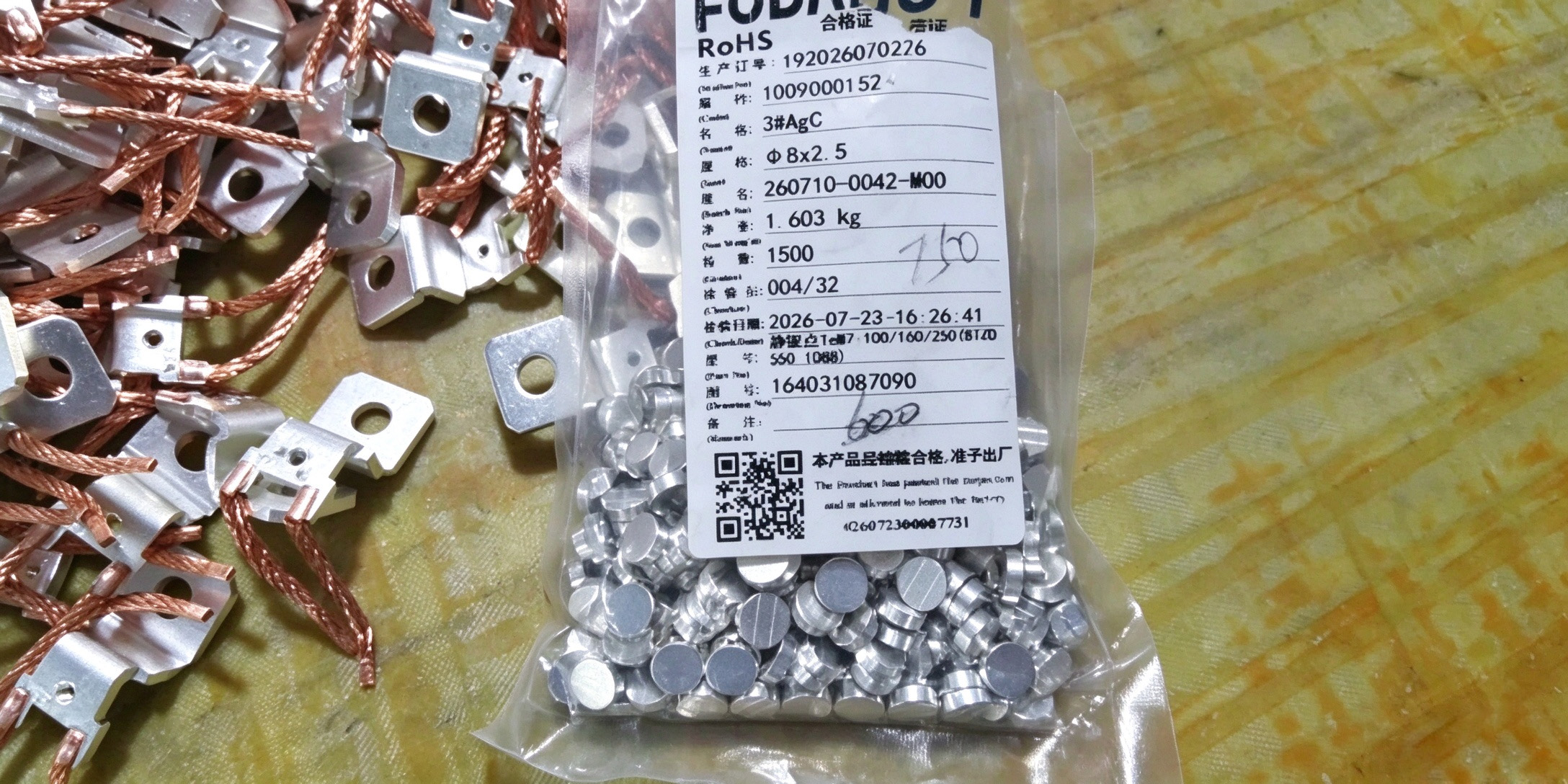
AgC contacts
メーカーによって接触部材質の呼び名が異なることを知っておくことも重要です。「銀接点」などの用語は、純銀ではなく銀ベースの接触部材質を指すのが通例です。
The actual composition, silver content, and material structure can be different between products. So, when comparing the material cost of different products, buyers should not look only at terms such as “silver contact.” It is better to check the specific material specification.
接触部タイプによって銀含有量はどう違うのか
回路遮断器のメーカーに見積りを求める際、「銅接点」「複合接点」「ハーフ銀接点」「銀接点」といった表現を耳にすることもあるでしょう。
これらは厳密な標準材質分類ではなく、業界で一般に用いられる呼称です。その主な違いの一つが接点の銀含有量です。
当社の MCCB では、接触部のオプションによって可動接点と固定接点の銀含有量が異なることがあります。
| Contact type | 可動接点の銀含有量 | 固定接点の銀含有量 |
|---|---|---|
| Copper contact | Mainly copper | Mainly copper |
| Composite contact | 15% | 25% |
| Half-silver contact | 35% | 42.5% |
| Silver contact | 50% | 80% |
As you can see, the silver content generally increases from composite contacts to half-silver contacts and then to full-silver contacts. The higher the silver content, the more silver material is used. Since silver costs much more than copper, this also increases the cost of the contacts.
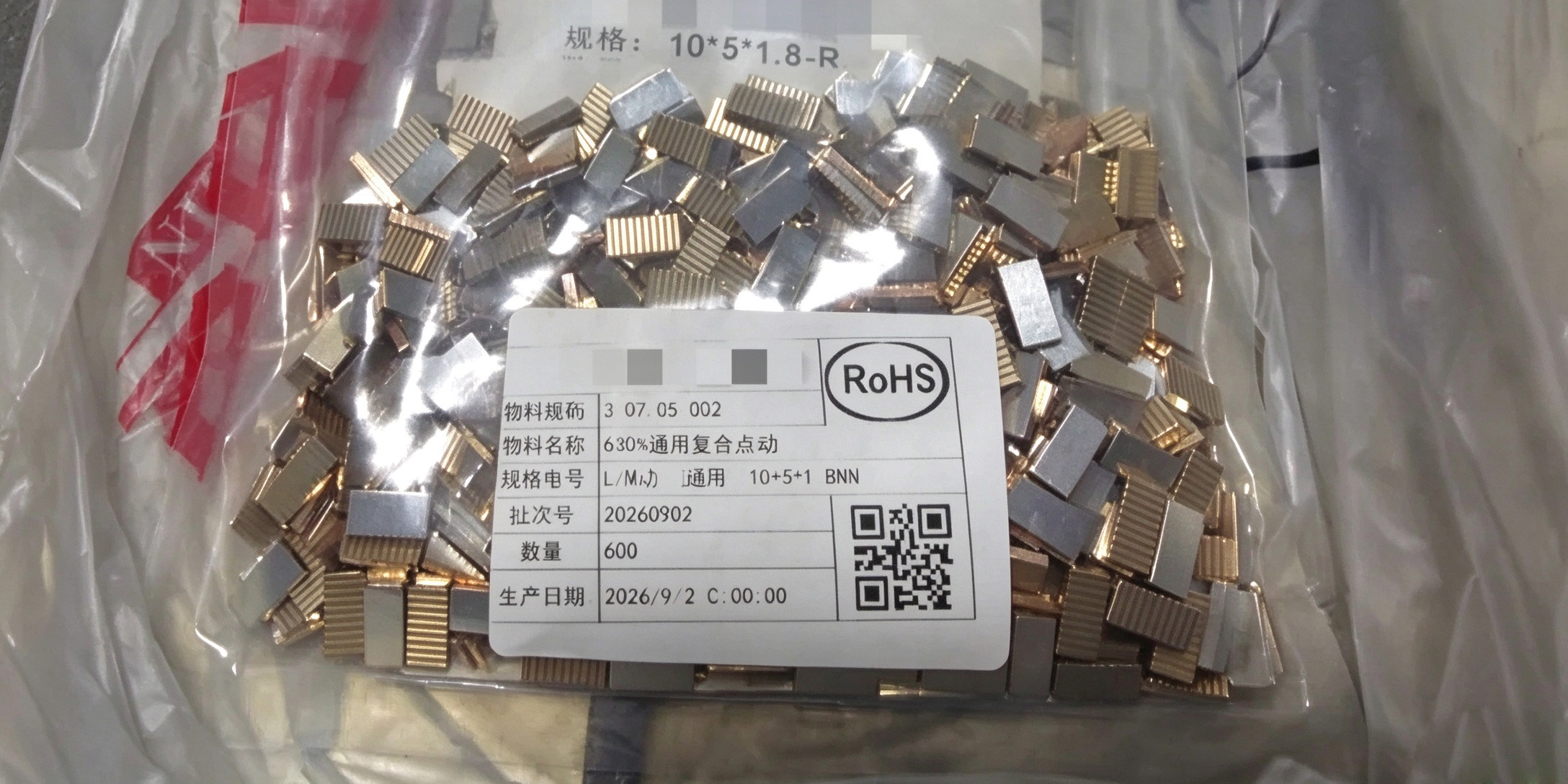
Composite contacts
Of course, the exact contact materials and silver content can vary slightly between different circuit breakers, so they may not always follow exactly the percentages shown above. But in general, a higher silver content usually provides better contact performance, while also increasing material cost and, in turn, the product price.
For example, for a 63A 3P mccb, the contact cost can be about $4.47 for copper contacts, $5.07 for composite contacts, $8.19 for half-silver contacts, and $10.13 for full-silver contacts. So, even with the same basic circuit breaker specifications, the contact configuration alone can create a noticeable difference in cost.
ただし、接触部オプションがすべての遮断器サイズで同一に揃っているわけではありません。フレームサイズと定格電流が大きくなるほど、接触部への要求も高くなります。
For example, for MCCBs with a frame size of 400A and above, copper contacts may no longer be suitable. Even the lowest contact configuration uses composite contacts. A similar situation can also be found in larger ACBs. As the frame size increases, the contact requirements also become more demanding.
These prices are not fixed, either. The market prices of silver and copper change over time. When copper or silver prices increase, the cost of the contacts can also increase. For contacts with higher silver content, changes in the silver price can have a more bigger effect on material cost.
Licen Insights
Contact materials are not only used in circuit breakers. They are also used in many other electrical products, such as contactors, relays, and switches that use contacts to make and break electrical connections.
製品ごとに動作条件も要求も異なるため、使用する接触部材質も異なることがあります。
More broadly, contact materials are a common topic in the electrical industry. When you look at the structure, performance, or price of different electrical products, you may come across similar material choices. Circuit breakers are just one common example.
Final Thoughts
Contacts may be only a small part of a circuit breaker, but they show that the cost of a breaker is not determined only by visible specifications such as size and rated current. The materials and components inside the product can also affect its overall manufacturing cost.
This is why circuit breakers with similar appearances and basic specifications may still have different internal configurations. Once you understand these details, it becomes easier to see where differences in circuit breaker prices can come from.


